Tag Archives: Dark matter

Multi-component Dark Matter: Let there be Heavy and Let there be Light

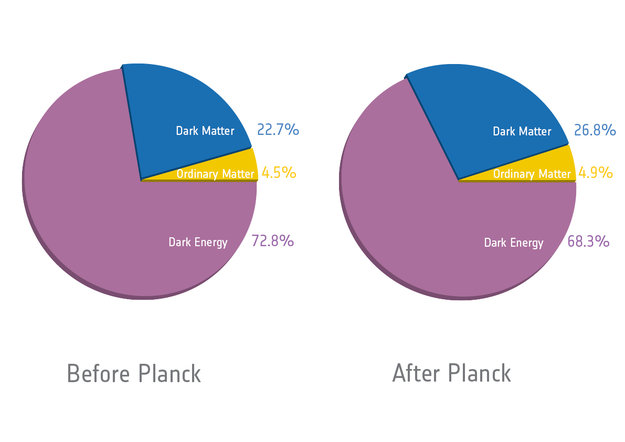
Around 27% of the universe’s mass-energy is due to dark matter, according to the latest Planck satellite results; this finding is consistent with a number of other experiments as well. This is approximately 6 times more than the total mass due to ordinary matter (dominated by protons and neutrons) that makes up the visible parts of galaxies, stars, planets, and all of our familiar world.
 
The most likely explanation for dark matter is some kind of WIMP – Weakly Interacting Massive Particle. The amount of deuterium (heavy hydrogen) produced in the very early universe rules out ordinary matter as the primary explanation for the various “excess” gravitational effects we see in galaxies, groups and clusters of galaxies and at the largest distance scales in our observable universe.

WIMPs are thought to be a class of new, exotic particles, beyond the Standard Model. A favored candidate for dark matter is the lightest supersymmetric particle, although supersymmetry is as of yet unproven. The lightest such particle would be very stable, having nothing into which it could decay readily. A mass range of 5 to 300 GeV or so is the range in which most of the direct detection experiments looking for dark matter are focused (1 GeV = 1 giga-volt is a little more than the mass of a proton).

But there would certainly be more than one kind of such WIMP formed in the very early universe. These would be heavier particles, and most would quickly decay into lighter products, but there might still be some heavier WIMPs remaining, provided their lifetime was sufficiently long. Particle physicists are actively working on models with more than one component for dark matter, typically two-component models with a heavy particle above 100 GeV mass, and a lighter component with mass of order 10 GeV (more or less).

In fact there are observational hints of the possibility of both a light dark matter particle and a heavier one. The SuperCDMS team has announced a possible detection around 8 or 9 GeV. The COGENT experiment has a possible detection in the neighborhood of 10 GeV, and in general agreement with the SuperCDMS results.
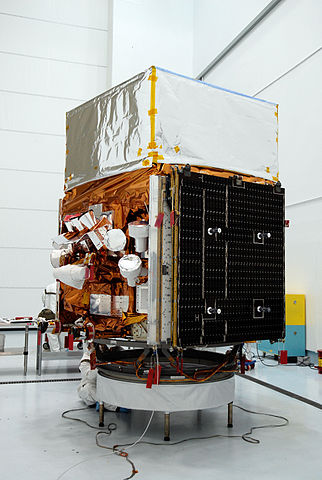
ImageFermi satellite payload, photo credit: NASA/Kim Shiflett

At the heavier end, the Fermi LAT gamma-ray experiment has made a possible detection of an emission line at 130 GeV which might result from dark matter decay. A pair of such gamma rays could be decay products from annihilation of a heavier dark matter particle with mass around 260 GeV. Or a particle of that mass could decay into some other particle plus a photon with about half of the heavy dark matter mass, e.g. 130 GeV.

Kajiyama, Okada and Toda have built one such model with a light particle around 10 GeV and a heavier one in the 100 to 1000 GeV region. They claim their model is consistent with the observational limits on dark matter placed by the XENON 100 experiment.

Gu has developed a model with 2 dark matter components with magnetic moments. Representative values of the heavy dark matter particle mass at 262 GeV and the lighter particle mass at 20 GeV can reproduce the observed overall dark matter density. He also finds the decay lifetime for the heavier particle state to be very long, in excess of 10^20 years, or 10 billion times the age of the universe, thus in this model the heavy dark matter particle easily persists to the present day. In fact, he finds that the heavy particle dominates with over 99% of the total mass contribution to dark matter. And a heavy dark matter particle with the chosen mass can decay into the lighter dark matter particle plus an energetic 130 GeV gamma ray (photon). This might explain the Fermi LAT results.

Furthermore, the existence of two highly stable dark matter particles of different masses would help explain some astrophysical issues related to the formation of galaxies and their observed density profiles. Mikhail Medvedev has numerically simulated galaxy formation using supercomputers, with a model incorporating two dark matter components. This model results in a better fit to the observed velocities of dwarf galaxies in the Local Group than does a model with a single dark matter component. (The Local Group includes our Milky Way, the Andromeda galaxy, the Magellanic Clouds and a number of dwarf galaxies.) His model also helps to explain the more flattened density profiles in galaxies and the smaller numbers of dwarf galaxies actually observed relative to what would be predicted by single dark matter component models.

Occam’s razor says one should adopt the simplest model that can explain observational results, suggesting one should add a second component to dark matter only if needed. It seems like a second dark matter component might be necessary to fully explain all the results, but we will require more observations to know if this is the case.

References:

http://prd.aps.org/abstract/PRD/v88/i1/e015029 Y. Kajiyama, H. Okada and T. Toda 2013, “Multicomponent dark matter particles in a two-loop neutrino model”

http://www.sciencedirect.com/science/article/pii/S2212686413000058
P. Gu 2013, “Multi-component dark matter with magnetic moments for Fermi-LAT gamma-ray line”

http://arxiv.org/pdf/1305.1307v1.pdf M. Medvedev 2013, “Cosmological Simulations of Multi-Component Cold Dark Matter”


Dark Matter in the Solar System: Does it Matter?

Dark matter is the dominant form of matter in the universe. Measurements from supernovae, the cosmic microwave background, galaxy clusters, galaxy rotation and other techniques indicate that it is approximately 5 or 6 times as abundant by mass density as ordinary matter. By particle number, it is probably less abundant, as long as the dark matter particle has mass greater than 6 GeV (giga-electron Volts) as seems likely (actually mass is in units of GeV/c², but physicists like to use the shorthand of “GeV”). The ordinary matter mass component is dominated by protons and neutrons with approximately 1 GeV mass. So if the dark matter particle turns out to be 6 GeV, which is near the lower bound of expected mass, then just as many dark matter particles as protons and neutrons combined would explain the nearly 6 times as much dark matter mass density on average, as compared to ordinary matter density. Otherwise, if the dark matter particle mass is larger, fewer would suffice.

Dark matter clumps, under its own gravitational influence, into large scale structures including superclusters of galaxies, clusters and groups of galaxies, and individual galaxies and dwarf galaxies. Within our own Milky Way galaxy, the dark matter is more diffuse, more spread out, than ordinary matter. As one moves away from the center of the galaxy, and above the spiral disk that contains most of the ordinary, luminous matter, the dark matter to ordinary matter ratio increases. Ordinary matter clumps to a much greater degree since it feels electromagnetic forces, and these result in friction and shock waves that heat up the ordinary matter, but also cooling via radiative processes – emission of photons. Cold ordinary matter will clump due to mutual gravitational infall as it cools, and this is how we end up with molecular clouds (stellar nurseries), stars, and planets, moons, asteroids, and comets. In these structures, which are at much smaller distance scales, ordinary matter dominates over dark matter. Dark matter doesn’t feel electromagnetic forces, so it remains more spread out, influenced primarily by gravitational forces.

Image

Nevertheless, one can ask the question, to what extent does dark matter influence our Solar System? For example, are the orbits of the Earth or other planets perturbed due to the gravitational effect of dark matter found in the Solar System? Surely there is some dark matter within the Solar System, assuming the most favored explanation, that it is some sort of new particle, a WIMP – weakly interacting massive particle, or perhaps an axion. This is why direct detection efforts looking for dark matter passing through Earth-bound laboratories are worthwhile.

The amount of dark matter in the galactic plane in the vicinity of the Solar neighborhood is estimated by looking at the dynamics of stars nearby and above and below the Milky Way’s disk. By looking at their velocity distribution we can measure the total mass density and subtract out the ordinary matter component. The favored value in the Solar neighborhood for the galactic background is usually taken to be 0.3 GeV/cc and equates to the equivalent of 1 proton per every 3 cubic centimeters. Thus, with this value, if the dark matter particle has mass 10 GeV, there would need to be 1 of these particles for each 30 cc of space. This is not a significant amount; within Earth’s orbit it would amount to about 8 billion tons. Out to the orbit of Saturn, the total amount would be around 9 trillion tons. This is not much in Solar System terms.

However, there’s more to the story than just this quick estimate. Let’s look at the observational constraints first; one can look for perturbations in the orbits of the major Solar System bodies to place some constraints on the amount of dark matter. Then we will look at the possibility that the  Solar System’s complement of dark matter is significantly higher than the value inferred from stellar dynamics within the Milky Way, due to gravitational capture of some of the dark matter encountered over billions of years as the Sun (and the rest of the Solar System) orbits the center of our galaxy at over 200 kilometers per second. The idea is that the average in the Solar “suburban” neighborhood is close to the estimate above, but in the “urban” neighborhood closer to the Sun the dark matter is more concentrated, due to being gravitationally swept up by the Sun and larger planets.

Russian researchers Pitjev and Pitjeva have studied hundreds of thousands of observations – over a nearly 50 year period – of the planets, a number of their moons, and spacecraft in the Solar System, looking for orbital perturbations. They find no measurable deviations which could be ascribed to dark matter. They have found that the density is less than 1.1 x 10^-20 grams/cc at the orbit of Saturn, 1.4 x 10^-20 g/cc at Mars, and less than 1.4 x 10^-19 g/cc at Earth. We can convert this to GeV/cc by noting that the proton mass is .938 GeV, which is equivalent to 1.67 x 10^-24 grams. So their upper limit on density at Saturn is then equivalent to 6000 GeV/cc. This is a much looser constraint. In other words, even at several thousand GeV/cc for the dark matter density near to the Sun, no apparent orbital perturbations would be expected for the 8 planets and several moons and spacecraft studied.

Thus one can conclude that even if the dark matter density in the Solar neighborhood were 10 or even 100 times larger than expected from stellar dynamics observations, that its gravitational effects on the precisely measured orbits of the major planets and major moons in the Solar system would be of no consequence.

In fact the authors note that the aggregate dark matter within Saturn’s orbit should be less than 1/6th of 1 billionth of the Sun’s mass, which is 2 x 10^27 metric tons. We’re talking at most 3 x 10^17 metric tons, which is a lot, but not in Solar system terms. The mass of the Moon is 7 x 10^19 metric tons, so this is an amount over 200 times smaller than the Moon’s mass spread out over the volume within Saturn’s orbit.

Another research team, at the University of Arizona, used a different technique five years ago. They modeled how much dark matter would be swept up into and gravitationally captured, by the Solar System over its 4.5 billion year history as it moves around the galactic center. Drs. Xu and Siegel calculate that about 10^17 metric tons of dark matter have been captured, out to the outer reaches of the Solar system. This amount is just 0.14% of the Moon’s mass and 0.0018% the mass of the Earth. This is consistent with the less than 1/3 x 10^18 metric tons within Saturn’s orbit from the orbital study above.

One of the important consequences of the Xu and Siegel results is that direct searches for dark matter need to consider in their models for data analysis not only the flux of the high velocity component as the Earth and Solar System move around the galactic center at over 200 km/sec, but also the lower velocity component. This applies to the more abundant dark matter that is bound within the Solar System and through which the Earth moves at a rate of 30 km/sec. At the Earth’s location their model implies a density 2000 times higher, or 600 GeV/cc, for this low velocity, bound component so despite the lower velocity, it could well dominate in dark matter detection experiments.

References:

https://darkmatterdarkenergy.com/2012/08/14/dark-matter-on-mars/

http://arxiv.org/pdf/1306.5534v1.pdf – N. P. Pitjev and E. V. Pitjeva, 2013, “Constraints on Dark Matter in the Solar System”

http://www.universetoday.com/15266/dark-matter-is-denser-in-the-solar-system/ – describes Solar System dark matter capture model of Ethan Siegel and Xiaoying Xu of the University of Arizona

http://arxiv.org/abs/0806.3767 – E. Siegel and X. Xu, 2008, “Dark Matter in the Solar System”


More Dark Matter: First Planck Results

Image

Credit: European Space Agency and Planck Collaboration 

Map of CMB temperature fluctuations with slightly colder areas in blue, and hotter areas in red.


The first results from the European Space Agency’s Planck satellite have provided excellent confirmation for the Lambda-CDM (Dark Energy and Cold Dark Matter) model. The results also indicate somewhat more dark matter, and somewhat less dark energy, than previously thought. These are the most sensitive and accurate measurements of fluctuations in the cosmic microwave background (CMB) radiation to date.

Results from Planck’s first 1 year and 3 months of observations were released in March, 2013. The new proportions for mass-energy density in the current universe are:

  • Ordinary matter 5%
  • Dark matter 27%
  • Dark energy 68%

Planck_cosmic_recipe_node_full_image

Credit: European Space Agency and Planck Collaboration

The prior best estimate for dark matter primarily from the NASA WMAP satellite observations, was 23%. So the dark matter fraction is higher, and the dark energy fraction correspondingly lower, than WMAP measurements had indicated.

Dark energy still dominates by a very considerable degree, although somewhat less than had been thought prior to the Planck results. This dark energy – Lambda – drives the universe’s expansion to speed up, which is known as the runaway universe. At one time dark matter dominated, but for the last 5 billion years, dark energy has been dominant, and it grows in importance as the universe continues to expand.

The Planck results also added a little bit to the age of the universe, which is measured to be about 13.8 billion years, about 3 times the age of the earth. The CMB radiation itself, was emitted when the universe was only 380,000 years old. It was originally in the infrared and optical portions of the spectrum, but has been massively red-shifted, by around 1500 times, due to the expansion of the universe.

There are many other science results from the Planck Science team in cosmology and astrophysics. These include initial support indicated for relatively simple models of “slow roll” inflation in the extremely early universe. You can find details at the ESA web sites referenced below, and in the large collection of papers from the 47th ESlab Conference link.

References:

http://www.esa.int/Our_Activities/Space_Science/Planck/Planck_reveals_an_almost_perfect_Universe – news article at ESA site

https://darkmatterdarkenergy.com/2011/07/04/dark-energy-drives-a-runaway-universe/ – runaway universe blog

http://www.rssd.esa.int/index.php?project=planck – Planck Science Team site

http://www.sciops.esa.int/index.php?project=PLANCK&page=47_eslab – 47th ESlab Conference presentations on Planck science results


SuperCDMS Collaboration Possible Detection of Dark Matter

Hard on the heels of the Alpha Magnetic Spectrometer (AMS) positron excess and possible dark matter report, we now have a hint of direct dark matter detection from the SuperCDMS Collaboration this month. A recent blog here on darkmatterdarkenergy.com discusses the detection of excess positron flux seen in the AMS-02 experiment on board the Space Shuttle. The two main hypotheses for the source of excess positrons are either a nearby pulsar or dark matter in our Milky Way galaxy and halo.

Image

Photo: CDMS-II silicon detector, Credit: SuperCMDS Collaboration

CDMS-II (CDMS stands for Cryogenic Dark Matter Search) is a direct dark matter detection experiment based in the Soudan mine in Minnesota. The deep underground location shields the experiment from most of the cosmic rays impinging on the Earth’s surface. Previously they had reported a null result based on their germanium detector and ruled out a detection. Now they have more completely analyzed data from their silicon detector, which has higher sensitivity for lower possible dark matter masses, and they have detected 3 events which might be due to dark matter and report as follows.

“Monte Carlo simulations have shown that the probability that a statistical fluctuation of our known backgrounds could produce three or more events anywhere in our signal region is 5.4%. However, they would rarely produce a similar energy distribution. A likelihood analysis that includes the measured recoil energies of the three events gives a 0.19% probability for a model including only known background when tested against a model that also includes a WIMP contribution.”

So essentially they are reporting a possible detection with something ranging from 95% to 99.8% likelihood. This is a hint, but cannot be considered a firm detection as it rises to the level of perhaps 3 standard deviations (3 sigma) of statistical significance. Normally one looks to see a 5 sigma significance for a detection to be well confirmed. If the 3 events are real they suggest a relatively low dark matter particle mass of around 8 or 9 GeV/c² (the proton mass is a little under 1 GeV/c², and the Higgs boson around 126 GeV/c²).

Image

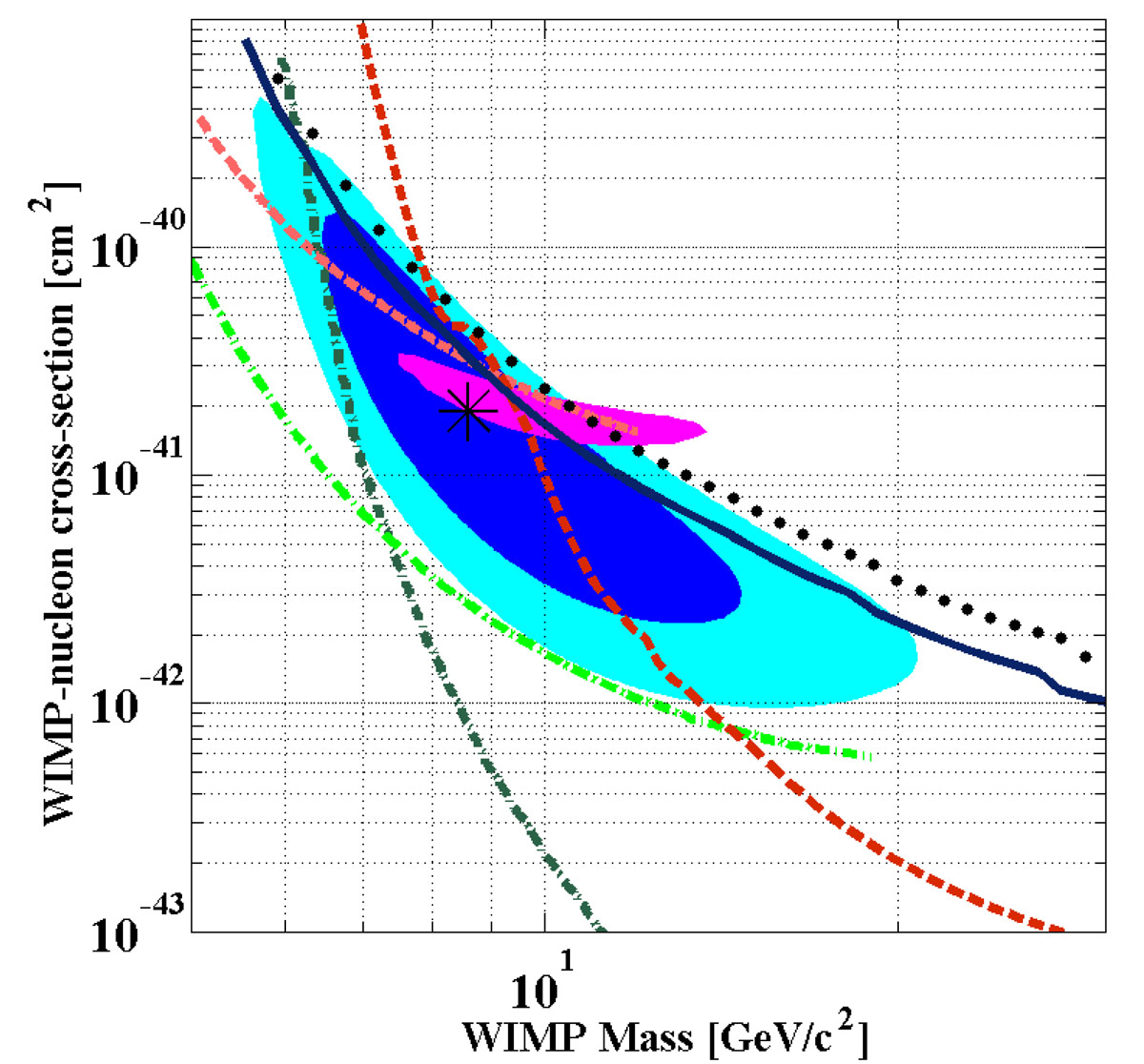
Figure: Error ellipses for CDMS-II and CoGeNT, assuming a dark matter WIMP explanation. Blue ellipses are the 68% (dark blue) and 90% (cyan) confidence levels for the CDMS-II experiment. The purple ellipse is the 90% confidence level for CoGeNT.

The figure shows the plane of dark matter (WIMP, or weakly interacting massive particle) cross-section on the y-axis vs. the WIMP mass on the x-axis. Note this is a log-log plot, so the uncertainties are large. The dark blue region is the 1 sigma error ellipse for the CDMS experiment and the light blue region is the 90% confidence error ellipse. The best fit is marked by an asterisk located at mass of 8.6 GeV/c² and with a cross-section a bit under 2 x 10^-41 cm². But the mass could range from less than 6 to as much as 20 or more GeV/c². And the cross-section uncertainty is over two orders of magnitude.

However, this is quite interesting as the error ellipse for the mass and interaction cross-section from this CDMS-II putative result overlaps well with the (smaller) error ellipse of the CoGeNT results. The CoGeNT experiment is a germanium detector run by a different consortium, but based in the same Soudan Underground Laboratory as the CDMS-II experiment! COGENT sees a possible signal with around 2.8 sigma significance as an annual modulated WIMP wind, with the modulation in the signal due to the Earth’s motion around the Sun and thus relative to the galactic center. The purple colored region in the figure is the CoGeNT 90% confidence error ellipse, and it includes the CDMS-II best fit point and suggests also a mass of roughly 10 GeV/c².

The DAMA/LIBRA experiment in Italy has for years been claiming a highly significant 9 sigma detection of a WIMP (dark matter) wind, but with very large uncertainties in the particle mass and cross-section. However both the COGENT results and this CDMS-II possible result are quite consistent with the centroid of the DAMA/LIBRA error regions.

And both the CoGeNT and DAMA experiments are consistent with an annual modulation peak occurring sometime between late April and the end of May, as is expected based on the Earth’s orbit combined with the Sun’s movement relative to the galactic center.

What we can say at this point is the hottest region to hunt in is around 6 to 10 GeV/c² and with a cross section roughly 10^-41 cm². Physicists may be closing in on the target area for a confirmed weakly interacting dark matter particle detection. We await further results, but the pace of progress seems to be increasing.

References:

https://darkmatterdarkenergy.com/2013/04/07/ams-positron-excess-due-to-dark-matter-or-not/ – Recent first results from AMS for positron excess

http://cdms.berkeley.edu/ – SuperCDMS Collaboration web site

http://arxiv.org/abs/1304.4279 – “Dark Matter Search Results Using the Silicon Detectors of CDMS II”

http://cdms.berkeley.edu/APS_CDMS_Si_2013_McCarthy.pdf – Kevin McCarthy’s presentation at the American Physical Society, April 15, 2013

http://cogent.pnnl.gov/ – CoGeNT website

https://darkmatterdarkenergy.com/2011/06/16/do-we-have-a-cogent-direct-detection-of-dark-matter/ – Discussion of CoGeNT 2011 results

http://arxiv.org/pdf/1301.6243v1.pdf  – DAMA/LIBRA results summary, 2013


AMS Positron Excess: Due to Dark Matter or not?

The first results from the Alpha Magnetic Spectrometer (AMS), which is an experiment operating in orbit on the International Space Station (ISS), have been released.

ImageIt’s been two years since the delivery via Space Shuttle to the ISS (in May, 2011) of the AMS-02 instrument, which was especially designed to explore the properties of antimatter. And it’s been a long time coming to get to this point, since the experiment was first proposed in 1995 by the Nobel Prize-winning M.I.T. physicist, professor Samuel Ting. A prototype instrument, the AMS-01, flew in a short-duration Space Shuttle mission in 1998, and had much lower sensitivity.

Over 16 countries across the globe participate in the AMS mission, and the instrument underwent testing at the CERN particle physics research center near Geneva and also in the Netherlands before being launched from Cape Canaveral, Florida.

The lifetime of the mission is expected to extend for over 10 years. In this first data release, with over 30 billion cosmic rays detected, the AMS has detected among these over 400,000 positrons, the positively charged antiparticles to electrons. This is the most antimatter that has ever been directly measured in space.

It is hoped that the AMS can shed light on dark matter, since one of the possible signatures of dark matter is the production of positrons and electrons when dark matter particles annihilate. This assumes that some type of WIMP is the explanation for dark matter, WIMP meaning a “weakly interacting massive particle”. Weakly interacting signifies that dark matter particles (in this scenario highly favored by many physicists) would interact through the weak nuclear force, but not the electromagnetic force. Which basically explains why we can’t easily detect them except through their gravitational effects. Massive particle refers to a particle substantially more massive than a proton or neutron, which have rest masses of just under 1 GeV (1 giga volt) in energy terms. A WIMP dark matter particle mass could be 10 to 1000 times or more higher. The lightest member of the neutralino family is the most-favored hypothesized WIMP dark matter candidate.

The figure below shows the positron relative abundance versus energy, based on 18 months of AMS operational data. The energy of detected positrons ranges from 1/2 GeV to over 300 GeV. The abundance, shown on the y-axis, is the fraction of positrons relative to total electrons and positrons detected at a given energy. The spectrum shows a clear trend to relatively fewer positrons as the energy grows to 10 GeV and then a substantially increasing relative number of positrons at higher energies. This general shape for the spectrum was seen with previous experiments including Fermi, Caprice94 and Pamela, but is much clearer with the AMS due to the higher resolution and significantly greater number of positrons detected. It is particularly this increase in positrons seen above 10 GeV that is suggestive of sources other than the general cosmic ray background.

PositronspectrumFigure: Positron relative fraction (y-axis) versus energy (x-axis)

So what is the source of the energetic positrons detected by the AMS? Some or all of these could be produced when two dark matter WIMP particles meet one another. In the WIMP scenario the dark matter particle such as the neutralino is neutrally charged (no electromagnetic interaction, remember) and also its own antiparticle. And when a particle meets its antiparticle what happens is that they mutually annihilate. The energy of the pair of colliding dark matter particles is transformed into lighter particles, including electron-positron pairs and energetic photons including gamma rays.

Another likely source is pulsars, which are rotating neutron stars with magnetic fields. Since neutron stars are compact and rotate quickly, and their magnetic field strengths are high, electrons and positrons can be accelerated to very high energy. In particular, the Geminga pulsar is the closest energetic pulsar and has been suggested as a major source of these extra positrons.

More data is needed, especially at higher energies above 100 GeV. Over the next few years as AMS continues to operate and the number of positrons detected climbs to 1 million and above, this spectral shape will be better determined. And as the shape of the high-energy portion of the spectrum becomes clearer, it will help elucidate whether dark matter or pulsars or something else are the primary source of the positrons.

You can follow AMS-02 on Facebook here.

References:

http://www.ams02.org/2013/04/first-results-from-the-alpha-magnetic-spectrometer-ams-experiment/

http://www.nytimes.com/2013/04/04/science/space/new-clues-to-the-mystery-of-dark-matter.html

http://press.web.cern.ch/backgrounders/first-result-ams-experiment

http://physicsworld.com/cws/article/news/2009/aug/10/excess-positrons-are-linked-to-geminga-pulsar

https://darkmatterdarkenergy.com/2012/06/05/antimatter-is-not-dark-matter-antimatter-being-uncovered-with-nuclear-reactors/


Caught in the Cosmic Web – Dark Matter Structure Revealed

NASA/ESA Hubblecast 58

This video reports on a very impressive research effort resulting in the first 3-D mapping of dark matter for a galaxy cluster. A massive galaxy cluster over 5 billion light-years from Earth is the first to have such a full 3-dimensional map of its dark matter distribution. The dark matter is the dominant component of the cluster’s mass. The cluster, known as MACS J0717, is still in the formation stage. The Hubble Space Telescope and a number of ground-based telescopes on Mauna Kea in Hawaii were used to determine the spatial distribution. The longest filament of dark matter discovered by the international team of astronomers stretches across 60 million light-years. Gravitational lensing of galaxy images (as Einstein predicted) and redshift measurements for a large number of galaxies were required in order to uncover the 3-D shape and characteristics of the filament.


Looking for Dark Energy in the Lyman Alpha Forest

Baryon acoustic oscillations (BAO) are the acoustic (sound) waves that occur in the very early universe due to very small density inhomogeneities in the nearly uniform fluid. These primordial acoustic oscillations have left an imprint on the way in which galaxies are spatially distributed. The characteristic scale length for these oscillations is around 500 million light years (in the frame of the present-day universe). A spatial correlation function is used to measure the degree to which galaxies and clumps of matter in general, including dark matter, are separated from one another. The characteristic length scale serves as a standard ruler for very large-scale clustering, and is seen as a distinctive break (change in slope) in the power spectrum of the degree of spatial correlation vs. distance.

An international consortium of astronomers representing 29 institutions have submitted a paper last month to the journal Astronomy and Astrophysics; the current version can be found here (http://arxiv.org/abs/1211.2616). They used a clever technique of detecting clouds of neutral hydrogen along the line of sight to a large number of quasars with high redshifts. Thus the matter clumps in this case are neutral hydrogen clouds or neutral hydrogen within intervening galaxies or proto-galaxies. These absorb light from the quasar and produce absorption lines in the spectrum at discrete locations corresponding to various redshifts. The authors are detecting a characteristic transition known as the Lyman alpha line, which is found well into the ultraviolet at 121.6 nanometers (for zero redshift).

For this work over 48,000 high-redshift quasars, with a mean redshift of 2.3, were taken from the 3rd Sloan Digital Sky Survey. A quasar may have many hydrogen clouds intervening along the line of sight from the Earth to the quasar. These clouds will be seen at different redshifts (less than the quasar redshift) reflecting their position along the line of sight. This is referred to as the Lyman alpha “forest”. This study is the first application of Lyman alpha forest measurement to the detection of the BAO feature. At the average red shift of 2.3, the wavelength of Lyman alpha radiation is shifted to 401.3 nm [calculated as (1+2.3)*121.6 nm], in the violet portion of the visible spectrum. The study incorporated redshifts from the absorbing clouds in the range of 1.96 to 3.38; these are found in front of (at lower redshift than) quasars with redshifts ranging from 2.1 to 3.5.

Speedup or slowdown versus age of universe. The Big Bang is on the left, 13.7 billion years ago.

The authors’ measurement of the expansion rate of the universe is shown as the red dot in this figure. The white line through the various data points is the rate of expansion of the universe expected versus time for the standard Lambda-Cold Dark Matter cosmological model. The expansion rate at early times was lessening due to gravity from matter (ordinary and dark), but it is now increasing, since dark energy has come to dominate during the last 5 billion years or so. The red data point is clearly on the slowing down portion of the curve. Image credit: http://sdss3.wordpress.com/2012/11/13/boss-detects-baryon-acoustic-oscillations-in-the-lyman-alpha-forest-at-z-of-2-3/  

The BAO feature has been measured a number of times, using galaxy spatial distributions, but always at lower redshifts, that is at more recent times. This is not only the first Lyman alpha-based measurement, but the first measurement made at a high redshift for which the universe was still slowing down, i.e. the expansion was decelerating. At the redshift of 2.3, when the universe was only about 3 billion years old, the gravitational effect of dark plus ordinary matter was stronger than the repulsive effect of dark energy. It is only more recently, after the universe become about 9 billion years old (some 5 billion years ago), and corresponding to redshifts less than about z = 0.8, that dark energy began to dominate and cause an acceleration in the overall expansion of the universe.

Since this observation shows a significantly higher rate of expansion than occurred at the minimum around 5 billion years ago, it is further evidence that dark energy in some form is real. As the authors state in their paper: “Combined with CMB constraints, we deduce the expansion rate at z = 2.3 and demonstrate directly the sequence of deceleration and acceleration expected in dark-energy dominated cosmologies.” This is an exciting result, providing additional confirmation that dark energy represents around three-quarters of the present-day energy balance of the universe.


Supersymmetry in Trouble?

Image

There’s a major particle physics symposium going on this week in Kyoto, Japan – Hadron Collider Physics 2012. A paper from the LHCb collaboration, with 619 authors, was presented on the opening day, here is the title and abstract:

First evidence for the decay Bs -> mu+ mu-

A search for the rare decays Bs->mu+mu- and B0->mu+mu- is performed using data collected in 2011 and 2012 with the LHCb experiment at the Large Hadron Collider. The data samples comprise 1.1 fb^-1 of proton-proton collisions at sqrt{s} = 8 TeV and 1.0 fb^-1 at sqrt{s}=7 TeV. We observe an excess of Bs -> mu+ mu- candidates with respect to the background expectation. The probability that the background could produce such an excess or larger is 5.3 x 10^-4 corresponding to a signal significance of 3.5 standard deviations. A maximum-likelihood fit gives a branching fraction of BR(Bs -> mu+ mu-) = (3.2^{+1.5}_{-1.2}) x 10^-9, where the statistical uncertainty is 95% of the total uncertainty. This result is in agreement with the Standard Model expectation. The observed number of B0 -> mu+ mu- candidates is consistent with the background expectation, giving an upper limit of BR(B0 -> mu+ mu-) < 9.4 x 10^-10 at 95% confidence level.

In other words, the LHCb consortium claim to have observed the quite rare decay channel from B-mesons to muons (each B-meson decaying to two muons), representing about 3 occurrences out of each 1 billion decays of the Bs type of the B-meson. Their detection has marginal statistical significance of 3.5 standard deviations (one would prefer 5 deviations), so needs further confirmation.

What’s a B-meson? It’s a particle that consists of a quark and an anti-quark. Quarks are the underlying constituents of protons and neutrons, but they are composed of 3 quarks each, whereas B-mesons have just two each. The particle is called B-meson because one of the quarks is a bottom quark (there are 6 types of quarks: up, down, top, bottom, charge, strange plus the corresponding anti-particles). A Bs-meson consists of a strange quark and an anti-bottom quark (the antiparticle of the bottom quark). Its mass is between 5 and 6 times that of a proton.

What’s a muon? It’s a heavy electron, basically, around 200 times heavier.

What’s important about this proposed result is that the decay ratio (branching fraction) that they have measured is fully consistent with the Standard Model of particle physics, without adding supersymmetry. Supersymmetry relates known particles with integer multiple spin to as-yet-undetected particles with half-integer spin (and known particles of half-integer spin to as-yet-undetected particles with integer spin). So each of the existing Standard Model particles has a “superpartner”.

Yet the very existence of what appears to be a Higgs Boson at around 125 GeV as announced at the LHC in July of this year is highly suggestive of the existence of supersymmetry of some type. Supersymmetry is one way to get the Higgs to have a “reasonable” mass such as what has been found. And there are many other outstanding issues with the Standard Model that supersymmetric theories could help to resolve.

Now this has implications for the interpretation of dark matter as well. One of the favored explanations for dark matter, if it is composed of some fundamental particle, is that it is one type of supersymmetric particle. Since dark matter persists throughout the history of the universe, nearly 14 billion years, it must be highly stable. Now the least massive particle in supersymmetry theories is stable, i.e. does not decay since there is no lighter supersymmetric particle into which it can decay. And this so called LSP for lightest supersymmetric particle is the favored candidate for dark matter.

So if there is no supersymmetry then there needs to be another explanation for dark matter.


Dark Matter on Mars?

Yes, there is most likely dark matter on Mars, and on Earth as well, and throughout our Solar System. The Curiosity rover will not be searching for dark matter, it not only does not have the right instrumentation, but it also remains on the surface, which is not the way to pursue dark matter searches. On Earth, the direct detection experiments searching for dark matter are made primarily by deploying large crystalline detectors in laboratories within deep mines or inside mountains. A lot of shielding is required. There are too many other sources such as cosmic rays and solar wind particles that would interfere with the search.

marscuriosityaug13
Credit: NASA/JPL-Caltech/MSSS  Curiosity Rover

“The expected rate of WIMP interactions is already constrained to be very small (less than one event per kg-year) and the expected nuclear recoil energy is very low (100 keV or less) so background rejection is crucial…  neutrons produce nuclear recoils identical to those from WIMP interactions. To eliminate the fast neutron flux induced by cosmic rays, such experiments must be located deep underground.” – http://astro.fnal.gov/projects/DarkMatter/darkmatter_projects.html

And given the expected interaction rate, one needs detectors with many kilograms of detector volume; a ton or more is desirable. They also need intensive calibration, care and feeding by scientists and technicians.

The dark matter density is expected to be comparable throughout our solar system and in the neighborhood of the Sun. The canonical value that most models use comes from measures of our galaxy’s dynamics and is 0.3 GeV per cubic centimeter (cc). This density is determined by looking at the large-scale gravitational effects of dark matter spread throughout our Milky Way galaxy, including its effect on the rotation rate as a function of distance from the galaxy’s center. It’s important to determine this number to get a handle on the predicted flux of dark matter particles impinging on a detector in one of the labs on Earth.

What does this 0.3 GeV per cc mean in terms of particle density? Well the mass of a proton is about 0.9 GeV where GeV is a billion (giga) electron-Volts and one electron-Volt is the energy of moving a single electron through a one Volt electron potential. This is a convenient unit of measurement for particle physicists. Since GeV is an energy, strictly speaking the mass is in units of GeV/c² (energy divided by the speed of light squared, in accordance with Einstein’s famous equation), “GeV” is used for shorthand. So if the mass of the dark matter particle were equal to the proton, that would imply about 1/3 of a particle per cc. But dark matter particles are heavier than protons according to particle physicists, significantly heavier.

On very large scales, in the early universe, slightly over-dense regions collapsed out of the general Big Bang driven-expansion due to their internal gravity (dominated by the dark matter within) and the ordinary matter in those regions formed galaxies and groups of galaxies, including clusters with up to 1000 or more galaxies. At the cluster of galaxies level the dark matter is dominant, but within an individual galaxy like our Milky Way ordinary matter can dominate due to the high degree of contraction possible with ordinary matter. Dark matter does not clump to the same degree as it can’t “cool off” via radiation.

So while dark matter dominates on the largest scales within the universe, amounting to 5 times as much matter as ordinary matter, within our galaxy the ordinary matter density is larger. Ordinary matter clumps more easily than dark matter, since it interacts with itself and light readily and undergoes cooling via radiative processes. The removal of energy via radiation allows matter to clump into molecular clouds and in turn form into stars and planets from that material.

A recent study by astronomers and astrophysicists associated with research institutes in Switzerland, Germany, the UK and China has used a new method and new data from a large sample of red dwarf stars to measure the dark matter density in the solar neighborhood. In this case what we mean by the neighborhood is up to about 3000 light-years from the Sun, and what is measured is an average number across that large region.

Their method makes fewer assumptions than other methods about the nature of the shape of our galaxy’s halo, i.e. the details of how the density of regular matter falls off as one moves away from the galaxy center. The new result is about 0.9 GeV per cc and comes with a large error bar of +/- 0.5. It does suggest the correct value may be 3 times higher than that previously assumed. Since the proton mass is 0.9 GeV, coincidentally, this would imply the equivalent of around one proton per cc in mass density. The dark matter particle is heavier, so the number of dark matter particles would be lower than one per cc.

Dark matter is thought to be due to a new particle, a WIMP (weakly-interacting massive particle) of some sort such as the lightest supersymmetric particle, which would remain stable against decay over billions of years. No such supersymmetric particle is yet detected, but the LHC (Large Hadron collider outside of Geneva) is working on the supersymmetry problem as well as the Higgs boson. The apparent discovery of the Higgs boson with mass around 125 GeV by the ATLAS and CMS experiments at LHC is consistent with supersymmetry.

While we don’t know the mass for dark matter WIMPs, the range of somewhat less than 10 GeV up to 1000 GeV is generally favored. Using the new value of 0.9 GeV per cc for dark matter density indicates that if the dark matter mass is around 10 GeV then there would be 1/10 of a dark matter particle per cc (or 100 per liter). If the mass of the particle is around 100 GeV then there would be one dark matter particle per 100 cc (which is 10 per liter).

So even with the potential  increase of a factor of 3 in actual density, this is an extremely rare particle and each one has a very low probability of actually interacting with ordinary matter and being detected. Which is why detectors are growing to 1 ton in size and multiple years of very sensitive observations are needed to place limits on the amount of dark matter or, more hopefully, obtain a statistically significant positive detection. A lot of progress is expected in the next couple of years with a new generation of larger detectors coming on line.

Reference:

S. Garbari, C. Liu, J.I. Read, G. Lake 2012, Mon. Not. R. Astron. Soc., submitted; arXiv:1206.0015v2 “A new determination of the local dark matter density from the kinematics of K dwarfs”


Dark Matter Bridge Discovered

A team of astronomers claims to have detected an enormous bridge or filament of dark matter, with a mass estimated to be of order 100 trillion solar masses, and connecting two clusters of galaxies. The two clusters, known as Abell 222 and Abell 223, are about 2.8 billion light-years away and separated from one another by 400 million light-years. Each cluster has around 150 galaxies; actually one of the pair is itself a double cluster.

Clusters of galaxies are gravitationally bound collections of hundreds to a thousand or more galaxies. Often a cluster will be found in the vicinity of other clusters to which it is also gravitationally bound. The universe as a whole is gravitationally unbound – the matter, including the dark matter – is insufficient to stop the continued expansion, which is driven to acceleration in fact, by dark energy.

Dark matter bridge

Figure: Subaru telescope optical photo with mass density shown in blue and statistical significance contours superimposed. In the filament area found near the center of the image, the contours indicate four standard deviations of significance in the detection of dark matter. The cluster Abell 222 is in the south, and Abell 223 is the double cluster in the north of the image. The distance between the two clusters is about 14 arc-minutes, or about ½ the apparent size of the Moon.

Dark matter was originally called “missing matter”, and was first posited by Fritz Zwicky (http://en.wikipedia.org/wiki/Fritz_Zwicky) in the 1930s because of his studies of the kinematics of galaxies and galaxy clusters. He measured the velocities of galaxies moving around inside a cluster and found they were significantly greater than expected from the amount of ordinary matter seen in the galaxies themselves. This implied there was more matter than seen in galaxies because the velocities of the galaxies would be determined by the total gravitational field in a cluster, and the questions have been where is, and what is, the “missing matter” inferred by the gravitational effects. X-ray emission has been detected from most clusters of galaxies, and this is due to an additional component of matter outside of galaxies, namely hot gas between galaxies. But it is still insufficient to explain the total mass of clusters as revealed by both the galaxy velocities and the temperature of the hot gas itself, since both are a reflection of the gravitational field in the cluster.

Dark matter is ubiquitous, found on all scales and is generally less clumped than ordinary matter, so it is not surprising that significant dark matter would be found between two associated galaxy clusters. In fact the researchers in this study point out that “It is a firm prediction of the concordance Cold Dark Matter cosmological model that galaxy clusters live at the intersection of large-scale structure filaments.”

The technique used to map the dark matter is gravitational lensing, which is a result of general relativity. The gravitational lensing effect is well established; it has been seen in many clusters of galaxies to date. In gravitational lensing, light is deflected away from a straight-line path by matter in its vicinity.

In this case the gravitational field of the dark matter filament and the galaxy clusters deflect light passing nearby. The image of a background galaxy located behind the cluster will be distorted as the light moves through or nearby the foreground cluster. The amount of distortion depends on the mass of the cluster (or dark matter bridge) and how near the line of sight passes to the cluster center.

There is also a well-detected bridge of ordinary matter in the form of hot X-ray emitting gas connecting the two clusters and in the same location as the newly discovered dark matter bridge.  The scientists used observations from the XMM-Newton satellite to map the X-ray emission from the two clusters Abell 222 and Abell 223 and the hot gas bridge connecting them. Because of the strong gravitational fields of galaxy clusters, the gas interior to galaxy clusters (but exterior to individual galaxies within the cluster) is heated to very high temperatures by frictional processes, resulting in thermal X-ray emission from the clusters.

The research team, led by Jörg Dietrich at the University of Michigan, then performed a gravitational lensing analysis, focusing on the location of the bridge as determined from the X-ray observations. The gravitational lensing work is based on optical observations obtained from the Subaru telescope (operated by the Japanese government, but located on the Big Island of Hawaii) to map the total matter density profile around and between the two clusters. This method detects the sum of dark matter and ordinary matter.

They analyzed the detailed orientations and shapes of over forty thousand background galaxies observable behind the two clusters and the bridge. This work allowed them to determine the contours of the dark matter distribution. They state a 98% confidence in the existence of a bridge or filament dominated by dark matter.

The amount of dark matter is shown to be much larger than that of ordinary matter, representing over 90% of the total in the filament region, so the gravitational lensing effects are primarily due to the dark matter. Less than 9% of the mass in the filament is in the form of hot gas (ordinary matter). The estimated total mass in the filament is about 1/3 of the mass of either of the galaxy clusters, each of which is also dominated by dark matter.

Observations of galaxy distributions show that galaxies are found in groups, clusters, and filaments connecting regions of galaxy concentration. Cosmological simulations of the evolution of the universe on supercomputers indicate that the distribution of dark matter should have a filamentary structure as well. So although the result is in many ways not surprising, it represents the first detection of such a structure to date.


References:

http://ns.umich.edu/new/releases/20623-dark-matter-scaffolding-of-universe-detected-for-the-first-time – press release from the University of Michigan

http://www.gizmag.com/dark-matter-filaments-found/23281/ “Dark matter filaments detected for the first time”

J. Dietrich et al. 2012 http://arxiv.org/abs/1207.0809 “A filament of dark matter between two clusters of galaxies”